Choosing the right nutrition for your furry friend is one of the most important decisions you’ll make as a pet parent. In the world of pet health, the debate between wet dog food and dry kibble is as old as time. With the pet food industry rapidly evolving in 2026, owners now have more choices and more questions than ever before.
Is the crunch of kibble better for dental health, or does the high moisture of canned dog food take the crown for kidney health? In this comprehensive guide, we’ll dive deep into the nutritional profiles, benefits, and upcoming trends of both options to help you decide which is better for your pup.
Wet Dog Food vs. Dry Dog Food: The Core Differences
At its simplest, the primary difference between these two types of food is moisture content. Dog wet food typically consists of 75% to 84% water, whereas dry kibble usually contains only 3% to 12%. However, the differences extend far beyond just hydration.
What is Wet Dog Food?
Often referred to as canned dog food or soft dog food, this variety is typically cooked at high temperatures to sterilize it before being sealed in cans, pouches, or trays. Because of the air-tight seal, it doesn’t require as many preservatives as dry food to remain shelf-stable until opened.
What is Dry Dog Food?
Dry food, or kibble, is made through a process called extrusion. Ingredients are mixed into a dough, cooked under pressure, and pushed through a die to create specific shapes. It is then dried and often sprayed with fats or vitamins to enhance flavor and nutrition.
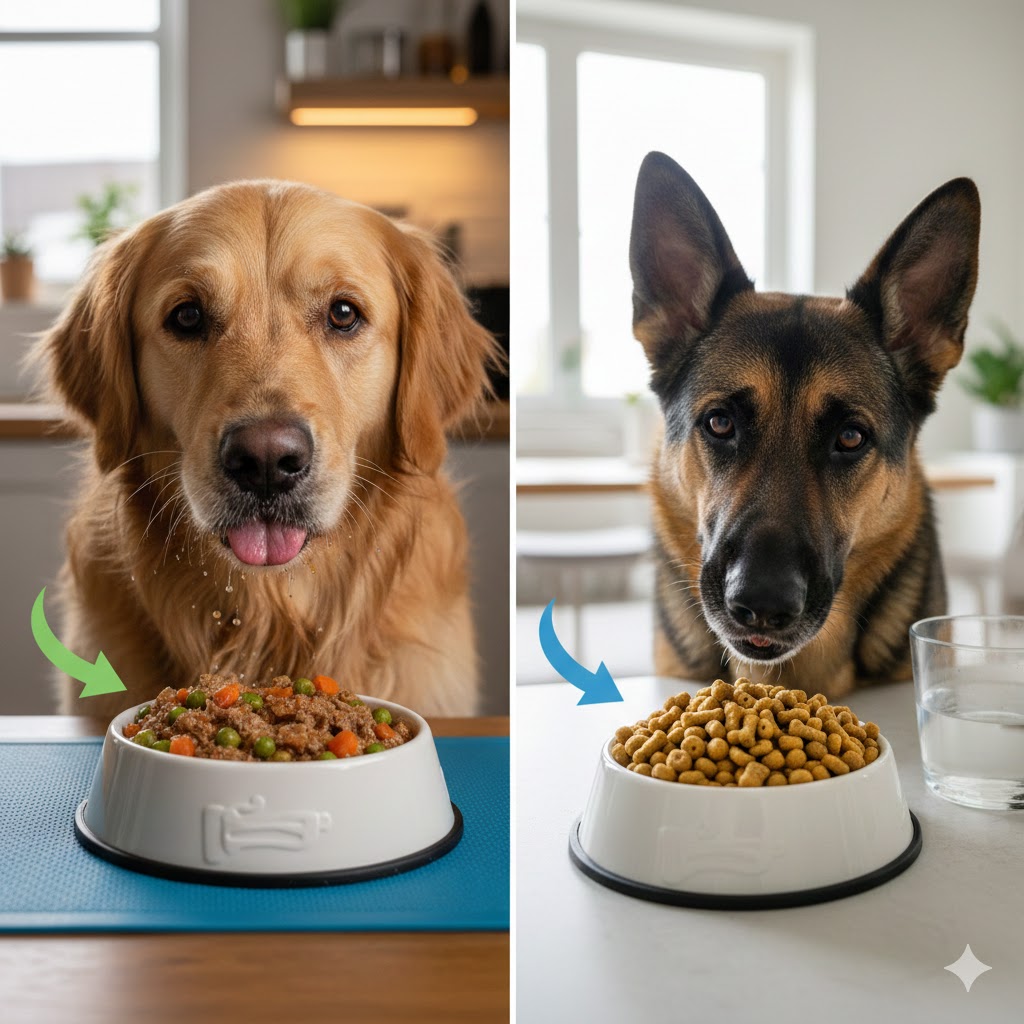
The Benefits of Wet Dog Food
For many pet parents, the best wet food for dogs is the one that gets their picky eater to finally finish a bowl. But the advantages of soft dog food aren’t just about taste.
1. Superior Hydration
Hydration is critical for kidney function and urinary tract health. Since many dogs don’t drink enough water from their bowls, wet dog food acts as a built-in hydration supplement. This is particularly vital for dogs prone to urinary crystals or those living in hot climates.
2. High Palatability
If your dog turns their nose up at dry biscuits, canned dog food is often the solution. The rich aroma and “real meat” texture are much more enticing to a dog’s powerful sense of smell. This makes it ideal for:
- Picky eaters who need encouragement.
- Senior dogs whose sense of smell may be fading.
- Sick dogs with a suppressed appetite.
3. Weight Management and Satiety
Because dog wet food is mostly water, it is less “calorically dense” than dry food. This means your dog can eat a larger volume of food without consuming more calories. It helps them feel “full” (satiety) more quickly, making it a valuable tool for weight-loss programs.
4. Easier to Chew
For puppies with tiny teeth or seniors with dental disease or missing teeth, soft dog food is a necessity. It eliminates the pain of crunching hard kibble.
The Benefits of Dry Dog Food
While wet dog food has its perks, dry kibble remains the most popular choice globally for several practical reasons.
1. Convenience and Shelf Life
Dry food is the “set it and forget it” option. Unlike canned dog food, which spoils within hours of being left out, dry kibble can sit in a bowl all day. This is perfect for “free feeders” who like to snack throughout the afternoon.
2. Dental Health
The mechanical action of chewing hard kibble can help scrape away a small amount of plaque from the teeth. While it is not a substitute for regular brushing, it provides more oral stimulation than soft textures.
3. Cost-Effectiveness
When you browse Pet Supplies Online, you’ll quickly notice that dry food is significantly cheaper per serving than wet food. Because you aren’t paying for water weight and expensive canning materials, your budget goes much further.
Comparison Table: Wet vs. Dry at a Glance
| Feature | Wet Dog Food (Canned/Soft) | Dry Dog Food (Kibble) |
| Moisture Content | High (75%–84%) | Low (3%–12%) |
| Palatability | Very High (Aromatic) | Moderate |
| Shelf Life (Opened) | 2–3 days (refrigerated) | Several weeks (sealed bag) |
| Cost | Higher per meal | Lower per meal |
| Dental Benefits | Minimal | Moderate (plaque scraping) |
| Ideal For | Hydration, Picky Eaters, Seniors | Convenience, Budget, Free Feeders |
2026 Trends in Canine Nutrition
The pet food landscape in 2026 is moving toward “Humanization” and “Sustainability.” Here are the top trends currently shaping what you find when searching for Pet Supplies Online:
1. GLP-1 and Weight Management Formulas
Following the human trend of metabolic health, 2026 has seen the rise of “satiety-focused” foods. Many soft dog food brands are now incorporating specific fibers that mimic the feeling of fullness, helping to combat the global pet obesity epidemic.
2. Sustainable Alternative Proteins
Environmental concerns are at an all-time high. We are seeing a surge in best wet food for dogs that uses insect-based proteins (like black soldier fly larvae) or lab-grown meats. These provide high-quality amino acids with a fraction of the carbon footprint of traditional beef or lamb.
3. The “Mixed Feeding” Revolution
More owners are moving away from the “all or nothing” approach. “Toppers,” small pouches of dog wet food designed to be squeezed over dry kibble are currently the fastest-growing segment in the market. This gives dogs the dental benefits of dry food with the hydration and taste of wet food.
4. Smart Packaging
In 2026, sustainability isn’t just about the food; it’s about the container. We are seeing a move away from traditional steel cans toward 100% recyclable mono-material pouches and biodegradable “tetra-style” cartons for canned dog food.
Can You Mix Both? (The Best of Both Worlds)
Many veterinarians recommend a combination. Mixing wet dog food with dry kibble allows you to balance cost-effectiveness with high-quality nutrition.
Pro-Tip for Mixing:
If you decide to mix, ensure you are adjusting the portions correctly. Dog wet food has fewer calories per gram than dry food. Usually, replacing 1/4 cup of dry food requires about 3.5 ounces of wet food. Always consult the feeding guide on the packaging to avoid overfeeding.
Environmental Impact: A Modern Consideration
If you are looking to reduce your “pawprint,” the type of food you choose matters. Studies in 2026 have shown that dry kibble generally has a lower environmental impact than wet dog food. This is due to:
- Packaging: Cans and foil trays require more energy to produce and recycle than paper or recyclable plastic bags.
- Shipping: Because wet food is mostly water, it is heavy. This increases the fuel required for transportation.
However, if your dog needs wet food for health reasons, look for brands that prioritize “upcycled” ingredients or sustainable seafood.
Finding the Best Pet Supplies Online
When shopping for Pet Supplies Online, it’s easy to get overwhelmed. To find the best wet food for dogs, look for these three green flags:
- AAFCO Statement: Ensure the label says the food is “complete and balanced.”
- Identifiable Protein: The first ingredient should be a specific meat (e.g., “Chicken” or “Beef”), not “meat by-products.”
- No Artificial Fillers: Avoid foods that use excessive corn, soy, or artificial dyes to bulk up the product.
Summary: Which Is Better?
There is no single “correct” answer. The better food is the one that meets your dog’s specific biological needs and fits your lifestyle.
- Choose Wet Dog Food if: Your dog is a senior, has kidney issues, is a picky eater, or needs to lose weight.
- Choose Dry Dog Food if: You have a multi-dog household, are on a budget, or prefer the convenience of free-feeding.
- Choose Both if: You want to provide a variety of textures and ensure your dog stays excited about mealtime while keeping costs manageable.
Frequently Asked Questions (FAQs)
1. Does wet dog food cause diarrhea?
Not necessarily. However, because soft dog food is rich and high in moisture, a sudden switch from dry to wet can upset a dog’s stomach. Always transition slowly over 7–10 days.
2. Can I leave wet dog food out all day?
No. Canned dog food should not be left at room temperature for more than 1–2 hours. Bacteria can grow rapidly in the moist environment, leading to food poisoning.
3. Is wet food better for older dogs?
Generally, yes. Senior dogs often suffer from dental pain or a decreased sense of smell. The soft texture and strong aroma of dog wet food make it much easier and more enjoyable for them to eat.
4. How do I store opened wet dog food?
Once a can or pouch is opened, it must be covered and refrigerated. Most canned dog food will stay fresh for 3 to 5 days in the fridge. Use a silicone can cover to keep the smell from spreading!
5. Is dry food really better for a dog’s teeth?
While the crunch helps slightly, it’s not a “brush in a bowl.” To truly maintain dental health, you should supplement any diet with dog-safe chew toys or daily tooth brushing.