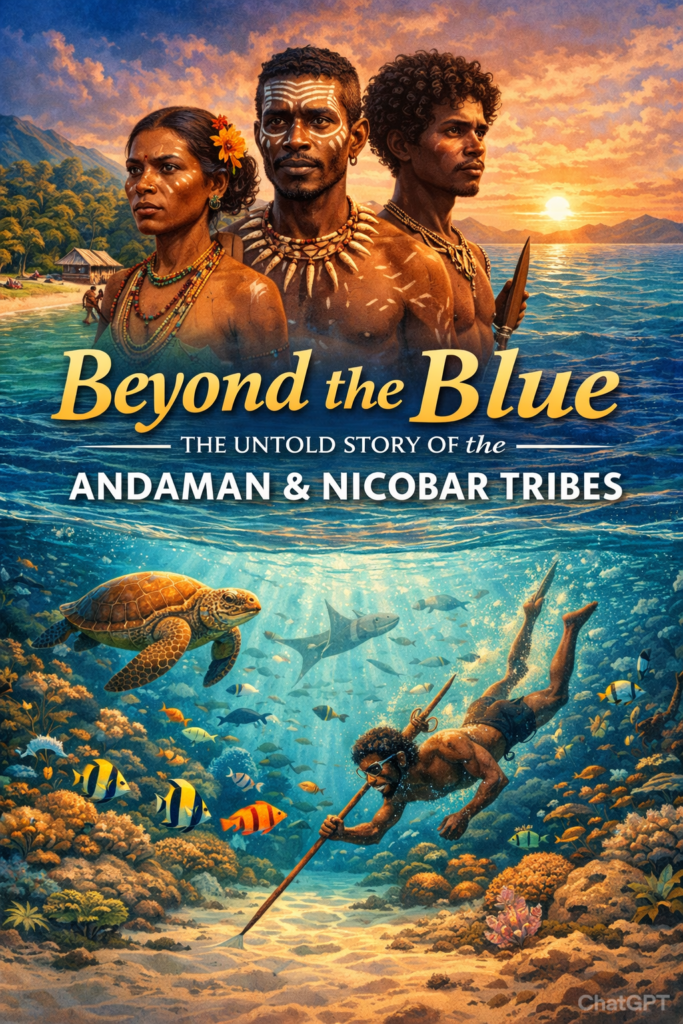

The phrase “Andaman and Nicobar” automatically brings your thoughts to imagine white sand beaches, clear turquoise ocean water, and drinking coconut water while sitting under a palm tree. The tropical island destination creates an unbreakable illusion of paradise.
The actual historical events show their significance because they existed before modern human societies emerged. The tribes of Andaman and Nicobar Islands sustain their cultural identity through their connection to all parts of this island chain, which includes its coral reefs and other natural features.
The Original Guardians of the Archipelago
The archipelago contains six indigenous tribes who belong to two main racial categories. The Great Andamanese, Onge, Jarawa, and Sentinelese tribes of the Andaman Islands represent four Negrito tribes that inhabit this territory. The Nicobar Islands contain two Mongoloid tribes, which are known as Shompen and Nicobarese.
The Nicobarese people have integrated into the dominant culture, while other groups continue to exist as one of the most secluded indigenous groups found throughout the world. The customs of Andaman and Nicobar Islands people provide an authentic experience that lets people see how ancient humans lived their lives.
The Sentinelese people who inhabit North Sentinel Island represent the most well-known indigenous group. The group has lived in complete isolation from outsiders because they want to maintain their traditional way of life. The indigenous people use their bows and arrows to defend their territory, which they treat as a sacred space.
The Jarawa people from South and Middle Andaman maintained their complete isolation until they started interacting with outsiders during the late 1990s. They sustain themselves through traditional hunting and gathering methods, which depend on their unspoiled forest and ocean environment for all their survival essentials.
The Ethics of Travel: Why “No” is the Only Answer
As a traveler, you must be curious whether you can visit these tribes. Well, the answer is no!
The unknown has attracted people for many years, which subsequently created the dangerous practice of “human safaris.” Indigenous communities should not be treated as tourist attractions because this practice turns into an extremely unethical behavior that prohibits any interaction with them.
The Indian government has established extensive buffer zones and stringent regulations to protect the Andaman and Nicobar tribes from outside interference. The purpose of the rules is to protect everything. The survival of their people depends on their ability to control their environment.
The communities that have lived in complete isolation from other societies since ancient times have not developed immunity against diseases that spread across the world. A single tourist who visits with a common cold, a cough, or mild flu symptoms can bring enough germs to wipe out an entire tribe within weeks. Their isolation needs protection because it protects their way of life, which protects their lives.
The islands require visitors to understand that they must honor their status as home to the native people. The absolute best way to show your appreciation for the rich heritage of the archipelago is through profound respect for its boundaries.
You can enjoy the beautiful beaches at Swaraj Dweep (Havelock) while you visit the historical sites at Ross Island and go scuba diving at the beautiful coral reefs. Leave the dense tribal reserves untouched and unbothered.